deities
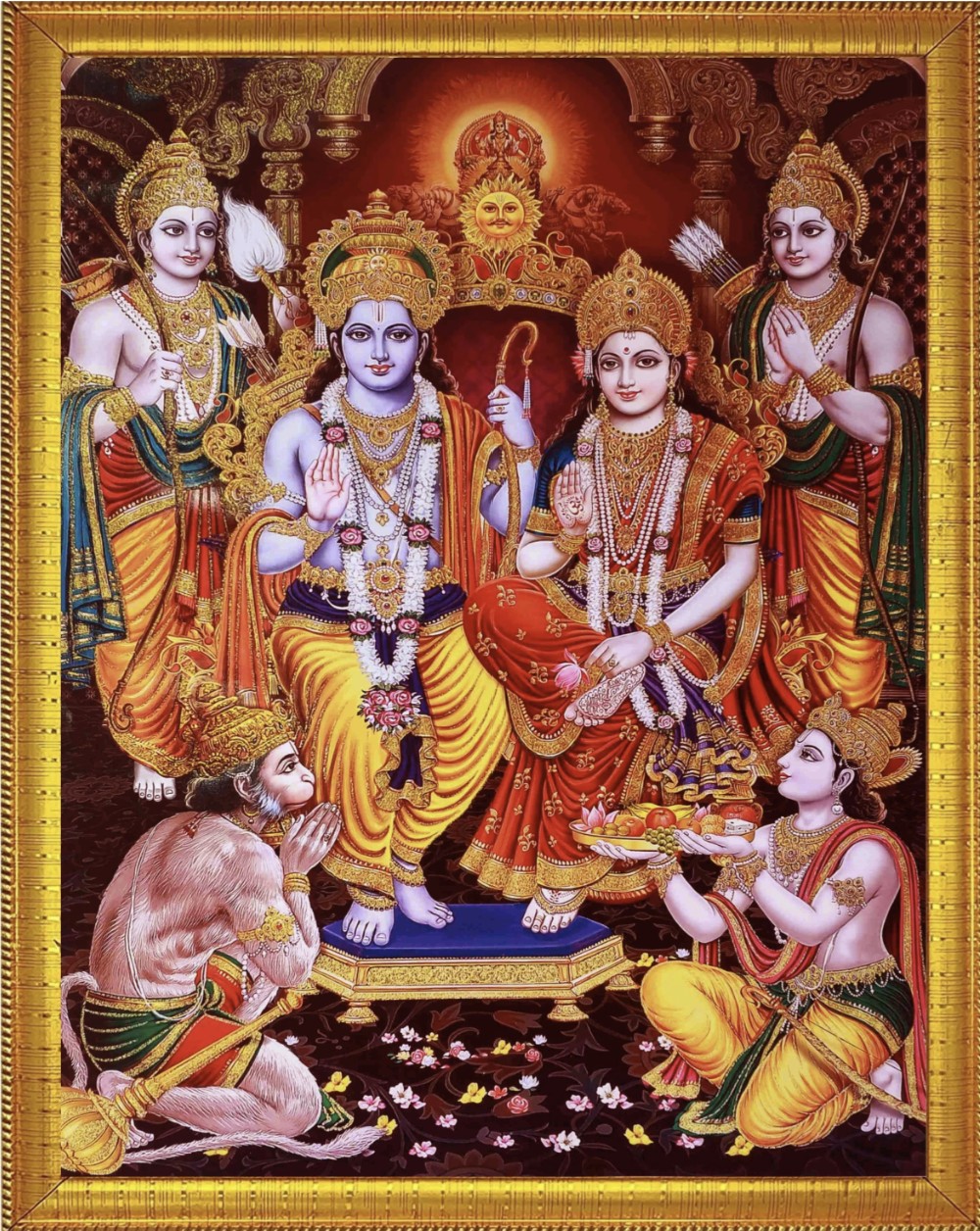
Ram Darbar
Ram ji with Maa Sita, Hanuman ji, and the four Ayodhya brothers (Ram, Lakshman, Bharat, Shatrughna).
Mixed sources: web and WhatsApp forwards.
Educational use on this site only; happy to correct or take down upon request.
Ram Darbar is the divine assembly centred on Ram ji—often with Maa Sita, Hanuman ji, and Ram ji’s brothers. Raja Dasharath had four sons: Ram, Lakshman, Bharat, and Shatrughna; together they are the heart of Ramakatha and of works such as the Ramcharitmanas (Tulsidas).
Note: Paintings and murtis vary: some show only Ram ji, Maa Sita, Lakshman ji, and Hanuman ji; others add Bharat ji and Shatrughna ji—use the clues below to spot each.
How to recognize each figure
Ram ji
- Weapons: Bow and arrows—chief kshatriya signs; not usually shown with Sudarshan chakra (that goes with four-armed Vishnu form).
- Dress: Crown of Ayodhya, royal robes; in battle scenes, armor or quilted dress depending on the artist.
- Form: Often blue skin; Shrivatsa / divine ornaments in many images; central in the darbar.
Maa Sita
- Weapons: None in the usual sense—faithful queen goddess; may hold lotus or join hands in anjali.
- Adornments: Crown, jewelry, sari; two arms in most images.
Lakshman ji
- Weapons: Bow and arrows like his elder brother—always with Ram ji in forest and war.
- Recognition: Younger look, crown often a step below Ram ji’s in art; Sumitra’s son, never apart from Ram ji in the story.
Bharat ji
- Weapons: Often bow or sword as prince of Ayodhya—brave prince; art may show royal dress and a modest crown (he gave the throne to Ram ji’s paduka / sandals).
- Story cue: Sometimes sandals or Nandigram setting in narrative art—helps tell him apart from Lakshman ji if the group is crowded.
Shatrughna ji
- Weapons: Often sword or bow—youngest of the four; paired in story with Bharat ji (one son of Kaikeyi, one of Sumitra).
- Recognition: Youth, warrior prince look; may stand near Bharat ji in full darbar sets.
Hanuman ji
- Weapons: Gada (mace)—his classic weapon; sometimes a mountain piece (Dronagiri) from the Ramayana.
- Form: Monkey face, tail, strong body; tilak, often kneeling in service with anjali or offering Ram ji’s ring.
- Dress: Sometimes light battle harness in war scenes—many darbar pictures show him without armor, devotion first.