satsang
No One Has the Power to Harm You: Three Principles for Peace
A teaching from Hanuman Prasad Poddar ji on Praarabdh, Forgiveness, and Lasting Peace.
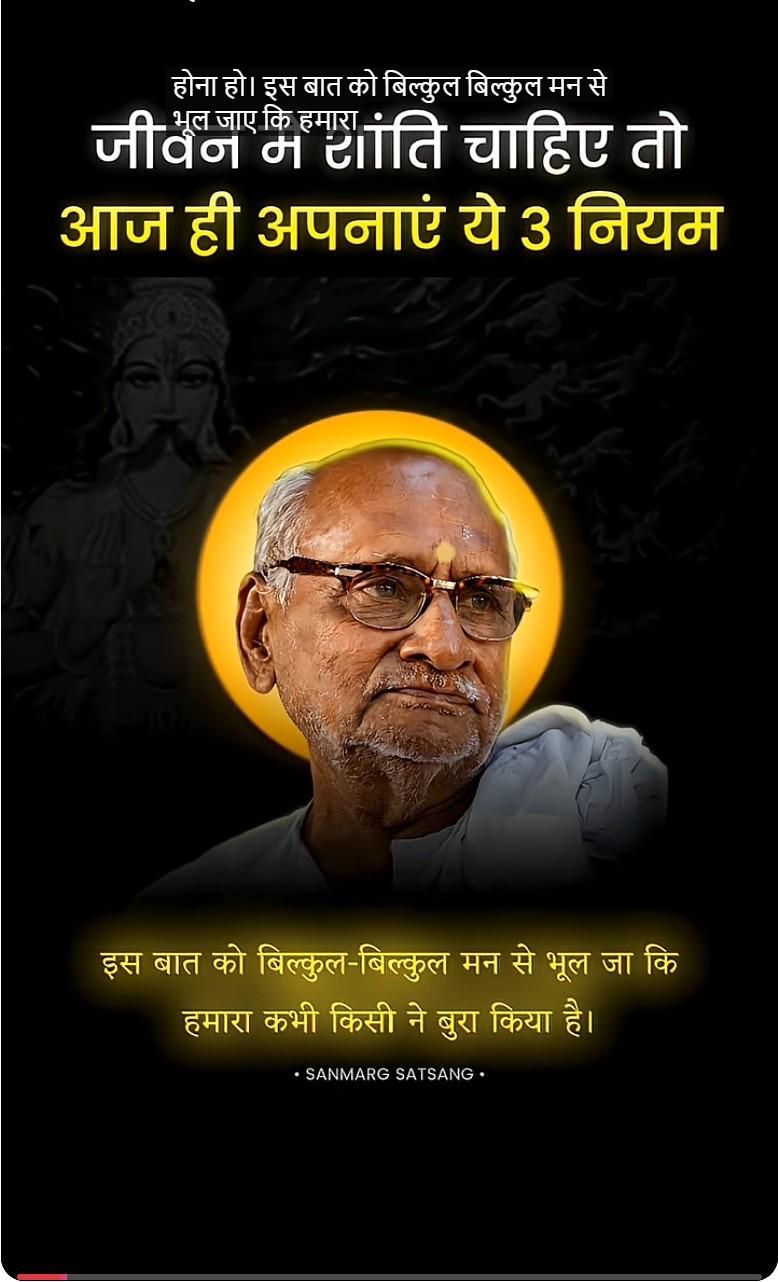
A teaching from Hanuman Prasad Poddar ji
Whatever harm has come to us arrived through our own prarabdh—the fruit of our past actions. We ourselves set the cause in motion. The person who attempted to harm us created heavy karma for themselves, yes, but our suffering did not come from their evil intention or deed. We suffered because we were destined to suffer. That person was only a nimitta, a mere instrument.
We experienced loss, pain, and trauma because we were meant to, according to our own prarabdha—the consequences we ourselves had sown.
First principle
No one possesses the power to harm us. Whatever happened was meant to be.
Second principle
If it was meant to be, what purpose does holding a grudge serve? Forget it. If you are able, ask God to forgive that person and move forward. When we sincerely attempt this, peace will come. We have held onto resentment for so long. Keep reminding yourself of these three points, and lasting peace will take root.
Third principle
Just as others have wronged us, we too have wronged others—willingly or unwillingly, knowingly or unknowingly. We should apologize to those people. If not in person, then at least seek their forgiveness in your heart. This third principle supports the second.
Suppose someone did something terrible to us, or we suffered an irreplaceable loss, and we cannot even think of forgiving them. In that moment, turn your attention to your own harmful actions toward others in life. Reflect: these things happen. It is better to move on.
Only one thought is worthy of holding—our Guru, our Beloved God.
Source: Pujya Bhaiji Maharaj, "Sukhi Banne Ke Sutra" (Principles of Happiness)
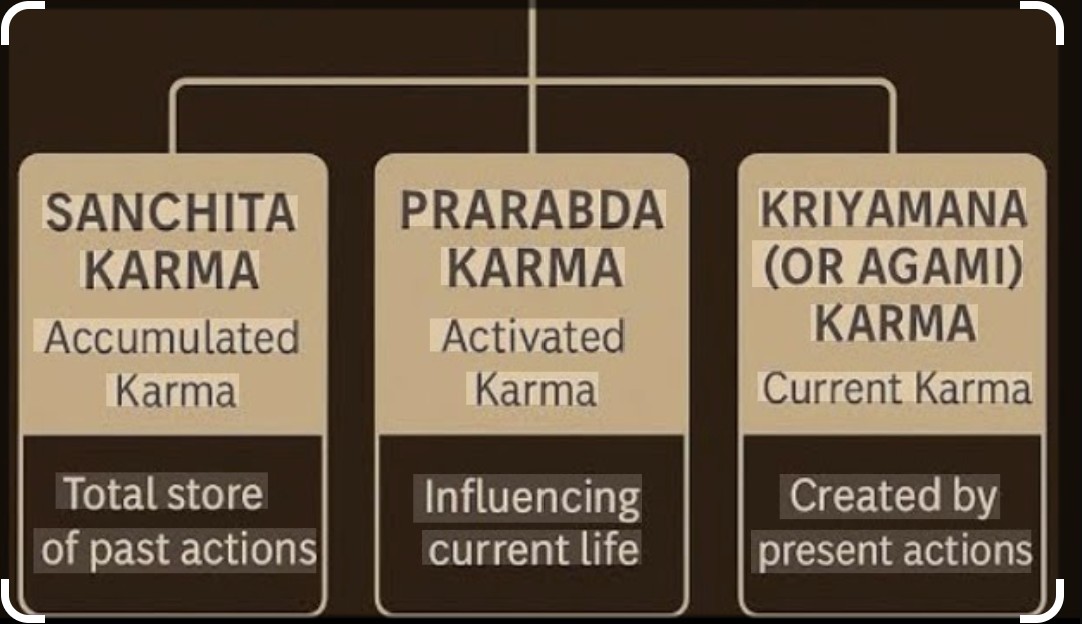
Praarabdh
There are three types of Karma:
- Praarabdh
- Sanchit Karm
- Kriyamaan Karm
Our body, the major events in our life, significant illnesses, education, and death are all determined by a fixed portion of our own Karma known as Praarabdh. Only through the Guru's divine grace can Praarabdh be changed; otherwise, a jeev must live through it as it unfolds.
Whatever remains after deducting Praarabdh is known as Sanchit Karm. Sanchit Karm is experienced through an individual's perception — how we react to situations, how well we endure pleasant and unpleasant circumstances, and whether we constantly brood over the past, good or bad. Naam Jap, chanting, and Bhajan can destroy bad Sanchit Karm. Naam Jap is the greatest Sadhna for Kalyug. It purifies our Antahkaran Chatushtay — our inner mind. Through chanting, our mind becomes focused on Bhagwan, our ishtadev, or our Guru. The greatest blessing is that when we cultivate the habit of chanting, Bhajan, or Naam Jap for even half an hour each day, Naam begins to reveal its effect in our life. We naturally start undertaking important tasks without wasting mental energy on useless, harmful, or frivolous thoughts. We begin to witness divine Leela, stop reacting to the situations around us, and draw ever closer to Bhagwan or our Guru.
Kriyamaan Karm is the new Karma we create in our everyday lives. In Kalyug, the greatest accumulation of bad Karma happens through Vaani — that is, speech. We say hurtful things to others, speak ill of people behind their backs, indulge in gossip, and find fault in others. This is how most of our new Karma is accumulated. Naam Jap helps here as well. When we strive to maximise chanting within our available time, we naturally stop wasting time on idle and harmful talk.
Naam Jap, chanting, and Bhajan are the greatest wealth — not only in this world, but beyond it. We leave behind property, status, wealth, and loved ones, but we carry our Karma and our Naam Jap with us.