satsang
What is the True Purpose of Satsang and Sadhana? सत्संग और साधन का वास्तविक उद्देश्य क्या है?
A reflection on a teaching from Bhai ji about our forgotten, unbreakable connection with Bhagwan.
My Musings—
Imagine how it feels to personally know a very powerful person in your area, your region, your country — and to know that this person genuinely cares for you and will always help you. That's an empowering feeling, isn't it? The owner of a great hospital, the head of a multi-billion-dollar business, the chief of police, the head of state — maybe even the chief of a criminal gang (just joking 🙂) — a close bond with someone rich, powerful, and influential gives us a certain peace of mind.
I believe in Bhagwan, and I know He is all-powerful — He can do anything. He can protect me and the people I care for, no matter what. He will always take care of us. That is my most profound belief. And something even more powerful is expressed beautifully in the Bhagavad Gita:
अनन्याश्चिन्तयन्तो मां ये जनाः पर्युपासते। तेषां नित्याभियुक्तानां योगक्षेमं वहाम्यहम्॥ (गीता ९.२२)
ananyāśh chintayanto māṁ ye janāḥ paryupāsate, teṣhāṁ nityābhiyuktānāṁ yoga-kṣhemaṁ vahāmyaham (Gita 9.22)
"For those who worship Me alone, thinking of no one else, ever steadfast in devotion — I provide them what they need, and preserve what they already have." — Bhagavad Gita, Chapter 9, Verse 22
Shri Krishna captures everything in just two words:
योगक्षेमं वहाम्यहम् — yoga-kṣhemaṁ vahāmyaham.
Two types of need, perfectly addressed:
- What we desire — wealth, career, recognition, relationships.
- What we wish to protect — our loved ones, our health, what we already hold dear.
Shri Krishna will take care of it all — but with one condition: अनन्याश्चिन्तयन्तो — thinking of no one else but Him.
Here is how it works: when our thoughts and mind are focused on our Ishta Deva — be it Shiva, Ram, Krishna, Hari, Durga, or Radha — our consciousness transcends the boundaries of worldly Maya for that duration, and our Ishta Deva steps in, taking responsibility for our worldly affairs.
This is one of my most cherished and comforting verses from the Bhagavad Gita — the very heart of Bhakti Yog.
I have tried it so many times, and every time it has worked like a charm.
And yet, most of the time, caught up in the busyness of everyday life, I remain oblivious to this truth — to this verse, to this living relationship with Bhagwan.
That very oblivion, believe me, is the root of one misery after another.
That is why Satsang is so important.
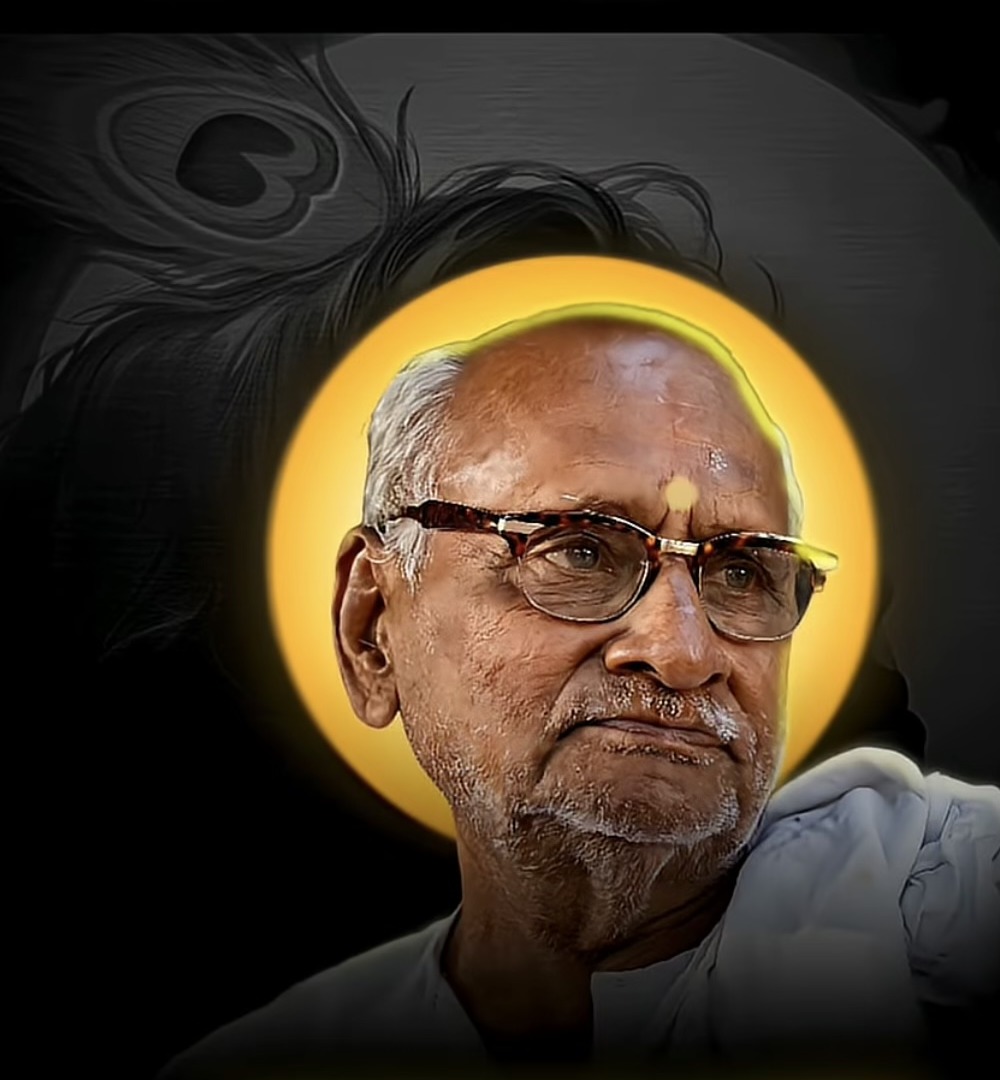
This short, in the voice of Bhaiji Maharaj, is exactly that kind of reminder — so I’m sharing it here, English translation and original Hindi both.
About the speaker: the voice in this discourse is Bhai ji — Shri Hanuman Prasad Poddar ji (1892–1971) — founder of Gita Press, Gorakhpur, and longtime editor of its devotional magazine Kalyan and Gita Expert. His talks and writings are still widely shared across Hindu satsang communities today.
The Forgotten Connection
The essence of Bhakti Yog
Our connection with Bhagwan already exists — it belongs to everyone. None of us is ever without contact with Bhagwan, not at any time, and not even while we are performing good or bad deeds. However we may be, wherever we may be, whatever we may be doing, Bhagwan’s constant connection with us remains unbroken. What is actually happening is that we are forgetting that constant connection. Because of this forgetting, we begin imagining something — or someone — other than Bhagwan as suited to us, and we try to attain it, hold on to it, and remain absorbed in it. This is what is called illusion (bhranti). This is what is called attachment (moha).
The Real Work of Satsang
So in satsang, in sadhana, what is it we actually need to do? There is only one thing — we may describe it by different names — and that is to awaken the eternal, unbreakable connection we already have with Bhagwan. We are eternally with Bhagwan, and Bhagwan is eternally with us.
An Unbreakable Bond
This unbreakable bond is expressed beautifully in Sanskrit as ananyabhava sambandha — a relationship in which neither can exist without the other. We cannot exist without Bhagwan, and it would not be wrong to say that Bhagwan, too, is not fully Bhagwan without us. Since neither can exist without the other, this eternal relationship is not something to be sought or requested — it simply is. But because we have forgotten it, we fail to recognize that connection. And because we don’t recognize it, we go looking elsewhere instead — in other things, other circumstances, through other people — for the comfort and happiness that was already ours.
So — what reminds you of your own unbroken connection with Bhagwan, on the days you find yourself forgetting it? I'd genuinely love to know.
In Bhakti Yog chanting the name of your favourite Bhagwan is the most effective way to keep us aware of our connection and keep us connected with Bhagwan.
Try for at least one day! Try bringing your focus back to this relationship whenever possible.
For example: -When you brush your teeth, -while preparing your meal, -walking up to your office desk or vehicle, -moving around your home or workplace
- walking to the kitchen pantry or coffee machine — remind yourself of this relationship. Keep chanting silently: The Name, The Mantra
This practice will do two things:
First, it will instantly declutter your mind. You know what I mean by decluttering — letting go of the useless, nagging thoughts, events, worries, and grudges that drain your energy and help no one.
Second, it will fill your mind with this divine, sublime connection.
And then, my friend, the magic begins to unfold.
Trust me! 🙂
Feel free to share your thoughts — I haven't had a chance to add a comment section beneath each article just yet, but you're always welcome to reach out through the general contact page.
मूल हिंदी (Original Hindi)
भ्रांति और मोह — विस्मृत जुड़ाव
भगवान के साथ हमारा संपर्क है ही। सबका है। भगवान के संपर्क से हम में से कोई भी वंचित हो ये नहीं। किसी काल में वंचित रहते हो सो नहीं। किसी बुरे या अच्छे कर्म करते समय भी हम वंचित हो तो भी नहीं। हम कैसे भी हो, कहां भी हो, कुछ भी करते हो, हमारे साथ भगवान का नित संपर्क है। उस नित संपर्क की विस्मृति हो रही है। उस विस्मृति के कारण से हम भगवान से अतिरिक्त अपने अनुकूल किसी की कल्पना करके उसको प्राप्त करना, उसे बांधे रखना, उसमें रमे रहना चाहते हैं। इसी का नाम भ्रांति है। इसी का नाम मोह है।
सत्संग और साधन का सार
तो ये सत्संग में, साधन में हमें करना क्या है? केवल एक ही बात करनी है — उसे विभिन्न नामों से हम कह सकते हैं — कि भगवान के साथ जो हमारा नित संपर्क है, नित्य अटूट संबंध है, वो जागृत हो जाए। हम भगवान के साथ नित्य हैं और भगवान हमारे साथ नित्य हैं।
अनन्याभाव संबंध — अटूट रिश्ता
ये जो हमारा अटूट संबंध है, इसको संस्कृत में एक बड़ी सुंदर भावना में कहते हैं — अनन्याभाव संबंध — एक के बिना दूसरा रह नहीं सकता। भगवान के बिना हम रह नहीं सकते, और ये कहें तो आपत्ति नहीं कि हमारे बिना भगवान भी भगवत नहीं रहते। तो एक के बिना दूसरा रह नहीं सकता, ऐसा जो हमारा नित संबंध है, वो संबंध पूछने-मांगने का नहीं है, वो तो है ही। पर उस संबंध की विस्मृति हो जाने से हम उस संपर्क को, उस संबंध को नहीं मान रहे — और नहीं मान रहे इसीलिए दूसरी जगह, दूसरे पदार्थों में, दूसरी परिस्थिति में, दूसरों की कल्पना करके, उनके द्वारा हम अपनी अनुकूलता, अपना सुख खोजते हैं।